Macro Notes - Understanding Bitcoin’s Recent Collapse
November 18, 2025
“Hey man, what’s the deal with Bitcoin?”
I’ve heard some variation of that question over the past several weeks now. It seems like no one is quite certain about why the digital version of gold is down by over 25% from its peak just over a month ago.
But much like with Gold, anybody trying to rationalize Bitcoin’s price action will inevitably end up relying heavily on unproven narratives. Is it because the Fed isn’t cutting in December? Maybe. Is it because the Fed is ending QT? Possibly. Is it because the tech sector is in a funk? Perhaps.
So what if we tried something a bit different. What if we modelled the price of Bitcoin using different variables to understand the decline a bit more?
To start, we could use the long-term price action for Fed expectations (via the 1y1m forward USD OIS rate), the amount of reserves in the US banking system, the performance of the Tech sector and the value of the trade-weighted US dollar as independent variables to create a ‘synthetic’ value for where Bitcoin should be.
The result of this multi-variate regression shows two things:
- The good news: That all of those variables combined have strong explanatory power over the trajectory of Bitcoin over the long-term (R2 = 0.90).
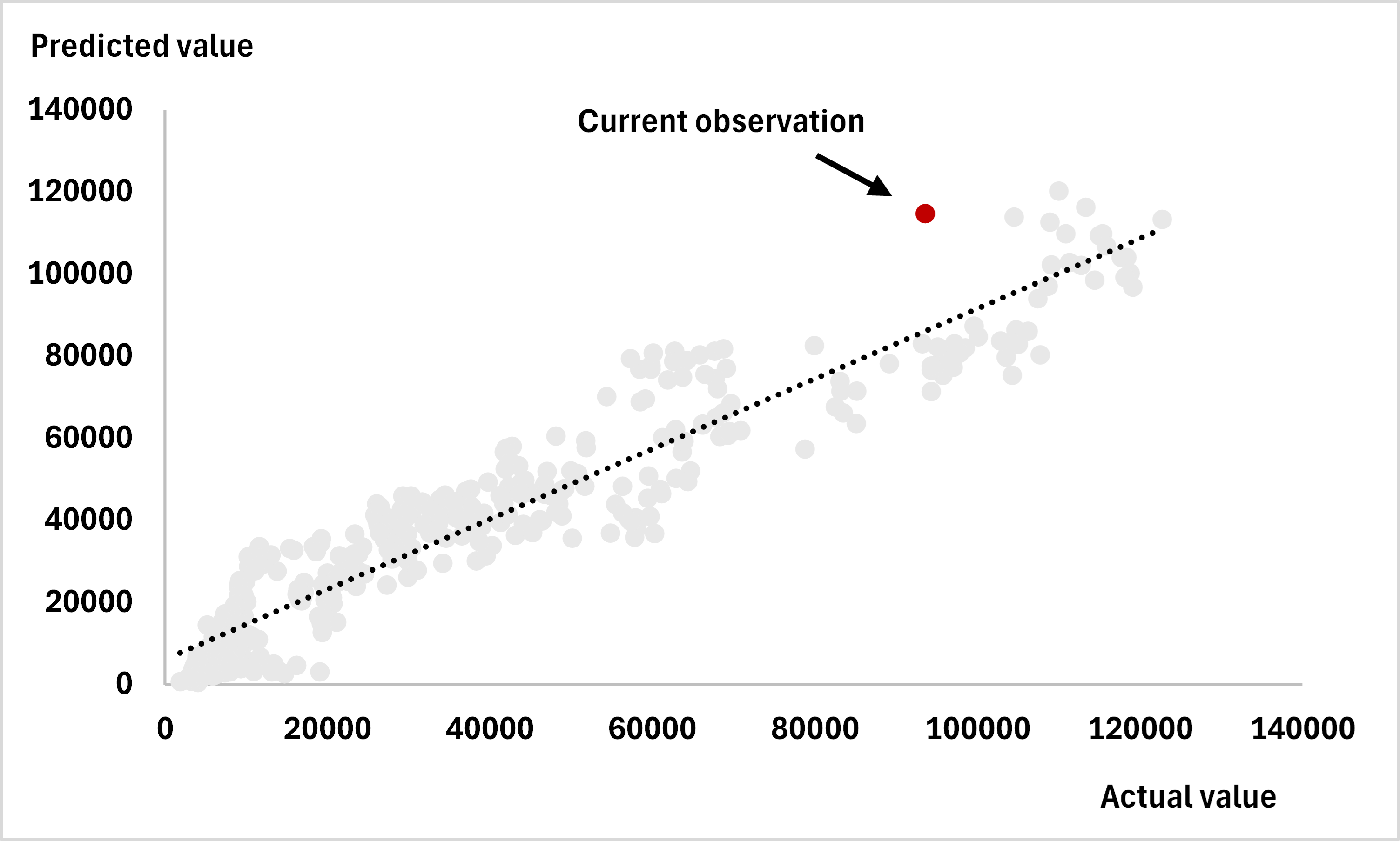
- The bad news: Unfortunately, the hypothetical value of Bitcoin in this model would correspond to $114,730 – which is about 18% higher than where the market is. Indeed, the residual is the largest it’s been to the downside in a long time.
At the risk of spinning some narrative, the large residual implies that this is likely flow related. Perhaps it is nothing more than a position realignment from a few large investors which (in turn) is triggering stop-losses in some of the weaker longs.
Sorry guys, that’s my best answer.
Chart 1 – Bitcoin: Actual vs Predicted Value Over Time
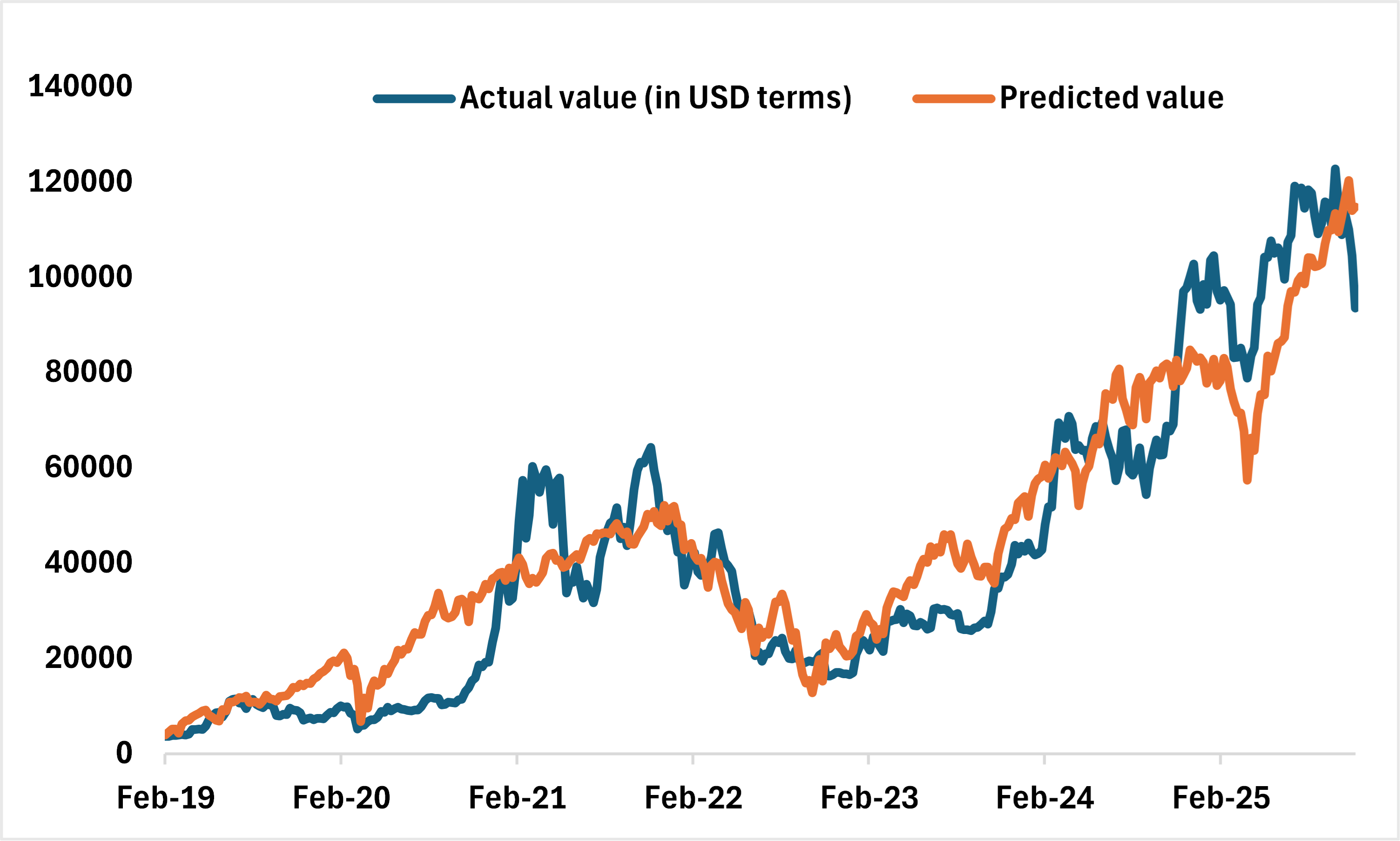
Chart 2 – Our Bitcoin ‘Model’ Doesn’t Account for the Current Sell-off