Weekly Basis Points - The Hyperscaler Capex Bind
July 27, 2026
Summary points:
- Alphabet highlighted the market’s AI dilemma. Despite a major earnings beat, the stock sold off after reporting negative free cash flow, reinforcing investor concerns that rising AI-related capex is weighing on near-term cash generation.
- The market has already priced in a successful AI payoff. Consensus expects S&P 500 EPS to rise roughly by 37% through the end of 2027 versus only 24% growth in free cash flow - implying investors are assuming today’s capex surge will translate into meaningfully higher future profits.
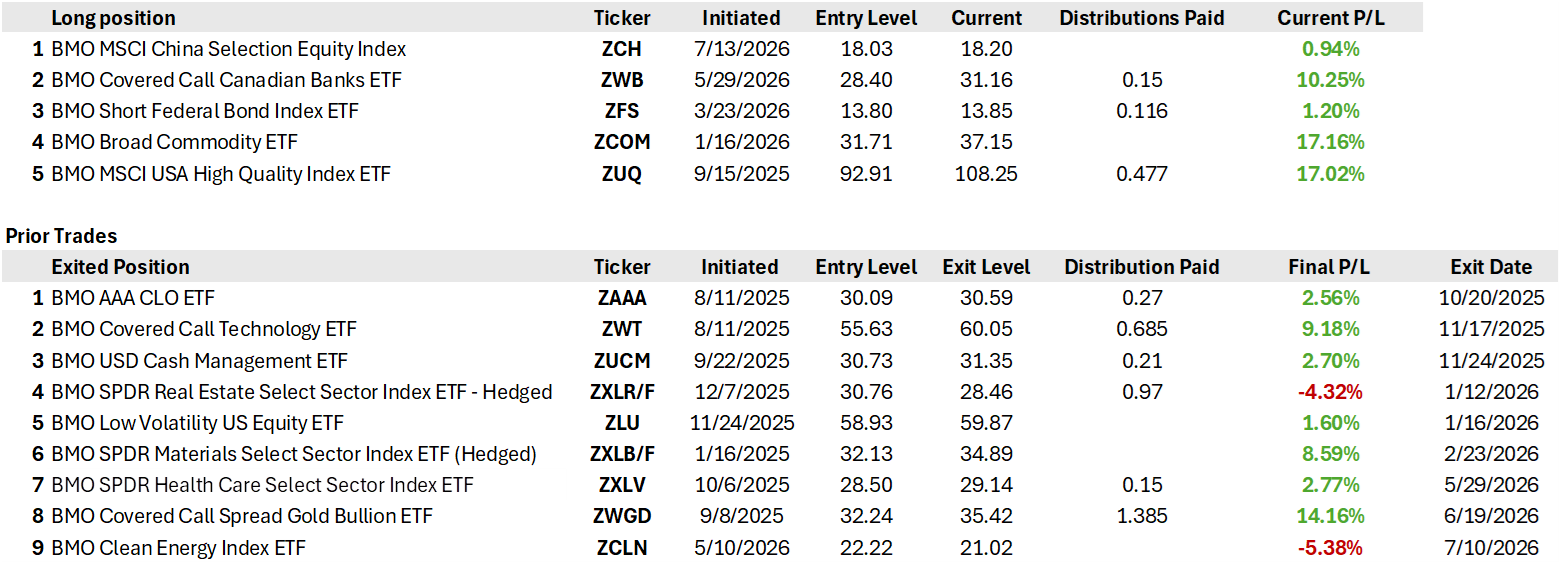
- We remain constructive despite near-term skepticism. Earnings surprises remain exceptionally strong, AI demand trends are holding up, and the U.S. economy remains resilient. As a result, we continue to favour U.S. equities through ZUQ, complemented by ZLU as a defensive buffer against potential positioning-driven volatility.
Amidst the hoopla that surrounded last week’s Alphabet earnings, it was revealed that the company ran negative free cash flow for the first time since its IPO. That detail largely overshadowed the headline earnings beat, with the stock falling 8-9% since the release. It’s an important development given that we’re heading into a week full of important earnings releases – including the other major hyperscalers.
But Alphabet’s earnings are an illustration of a particular type of tension that is playing out in the market right now. Since investors are already heavily positioned for a positive macro and earnings backdrop, the market has become increasingly sensitive to bearish narratives. For instance, if hyperscalers spend too little, then it’s a signal that demand for AI is waning at the margin. If they spend too much, then the narrative is all about whether those investments will generate an adequate return. That puts long-term bulls in somewhat of a bind.
Of course, it is worth examining why higher capex has become so problematic. To us, it’s largely because the market has priced in a considerable degree of optimism already.
Consider the current market expectations for the growth of free cash flows versus earnings in the coming years (the recent divergence between the two is shown in Chart 1). For those that need a refresher, free cash flow measures cash remaining after capex and therefore reflects how much capital firms can return to shareholders or reinvest.
Chart 1 – S&P 500 Free Cash Flow vs Earnings Over Time
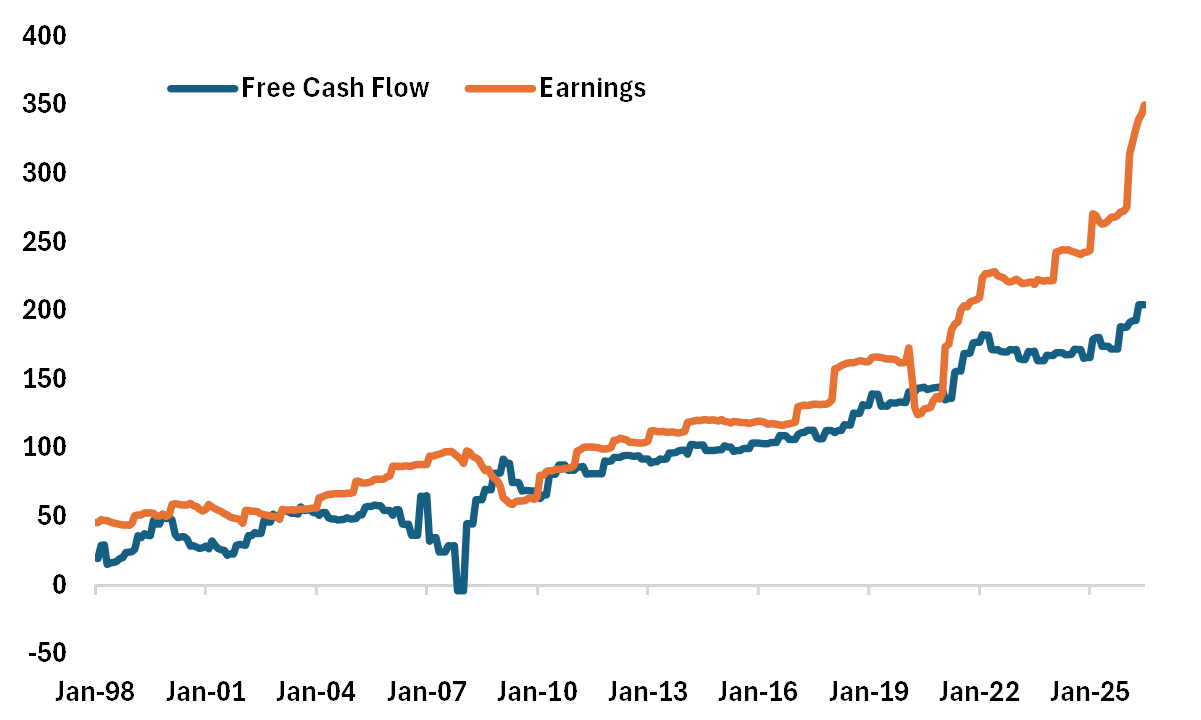
Current consensus expects S&P 500 free cash flow per share to increase by roughly 24% between now and end-2027. Over that same period, earnings per share are expected to rise by 37%. The gap between the two is largely explained by the AI investment cycle – and the heavy degree of capex. Higher capital expenditures reduce free cash flow today, even as they are expected to support much stronger earnings in future years.
However, for those earnings expectations to be realized, today’s AI investments must eventually generate a meaningful acceleration in operating profits. In other words, investors are assuming that the current surge in capex represents a temporary drag on free cash flow rather than a permanent reduction in cash generation. That may ultimately prove correct, but the timing and magnitude of that payoff remains uncertain.
For now, we’re paying more tribute to the constructive fundamental backdrop. Earnings momentum continues to be too powerful to ignore – with the degree of positive surprises this season (at 88%) well above long-term averages. At the same time, management commentaries across sectors continue to highlight rising AI-related investment and demand. When taken with a still resilient real US economy, an overweight position in US equities still feels like the right play.
We’re expressing that view with a long position in ZUQ (which focuses on US quality) while augmenting that with a position in ZLU (which focuses on low volatility as a factor). The latter should provide some insurance in the near-term as investors recalibrate positioning.
Macro Regime Call
Current macro regime: Reflation – stronger than expected growth + stickier inflation pressure
Policy regime: Neutral/Hawkish (Monetary) and Neutral/Dovish (Fiscal)
Market regime: Cautiously bullish
Risks to call:
- Demand for AI slows considerably.
- Geopolitics lead to another commodity shock.
- Inflation pressures deepen.
Portfolio Strategy:
a.) Global PMIs: PMI figures from the larger economies are flying under the radar here. The broad takeaway is that global growth remains resilient and that activity is improving across most developed markets (with Europe showing the biggest surprise). What’s more is that we’re seeing participation in the manufacturing sector as well – so this isn’t just a services story.
Of particular note is the pick-up in new orders and stabilization of employment sub-indices. Stronger order books and improving business activity are consistent with the robust earnings season that we’ve had so far.
b.) Earnings: Just below 30% of all S&P 500 companies have reported so far, but the results have been very strong. The percentage of positive surprises (at 88%) is well above long-term averages while the scale of positive surprise is also relatively high (albeit skewed by the Alphabet release last week).
So far, the key themes that we’re seeing include:
- Financials have been the biggest surprise – thanks in large part to capital markets activity.
- Consumer spending has been resilient.
- Lots of interest across sectors to deepen AI investment.
- Markets are focusing a lot on forward guidance and signs of increased confidence in demand.
The coming week is a huge one for earnings – and we’ll be watching to see if the above themes continue to carry through.
c.) Thoughts on markets: There’s a lot of handwringing going on about movements in equities and rates right now. But keep the following in mind…
- On equities: Positioning is a barrier to near-term momentum. However, that should change if earnings continue to surprise in the manner that they have so far.
- On rates: It’s hard to be constructive right now. Nominal yields have been pushed higher by real yields over the past several months and now appear to be vulnerable to shifts higher due to inflation breakevens as well.
Commodities (particularly energy) have performed thus far this quarter. We suspect this is due to growing disenchantment with fixed income.
Chart 2 – BMO Macro Regime Model Portfolio Performance
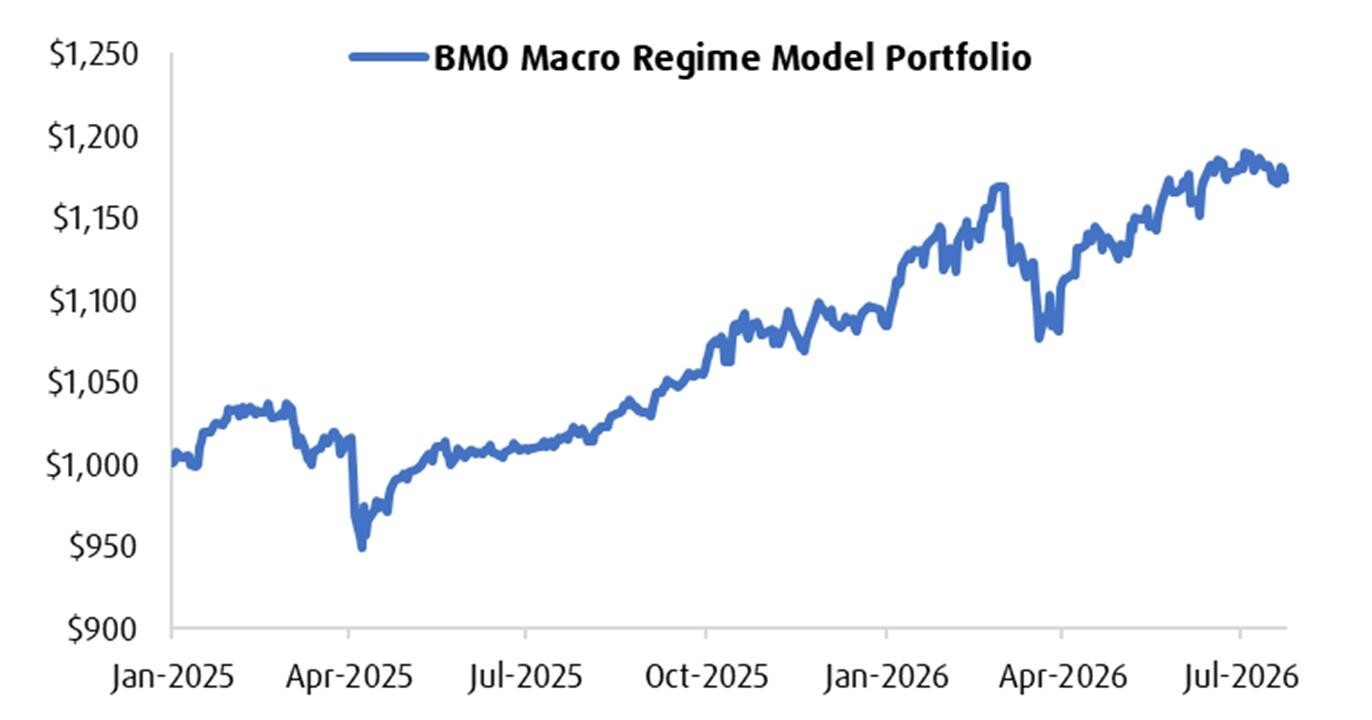
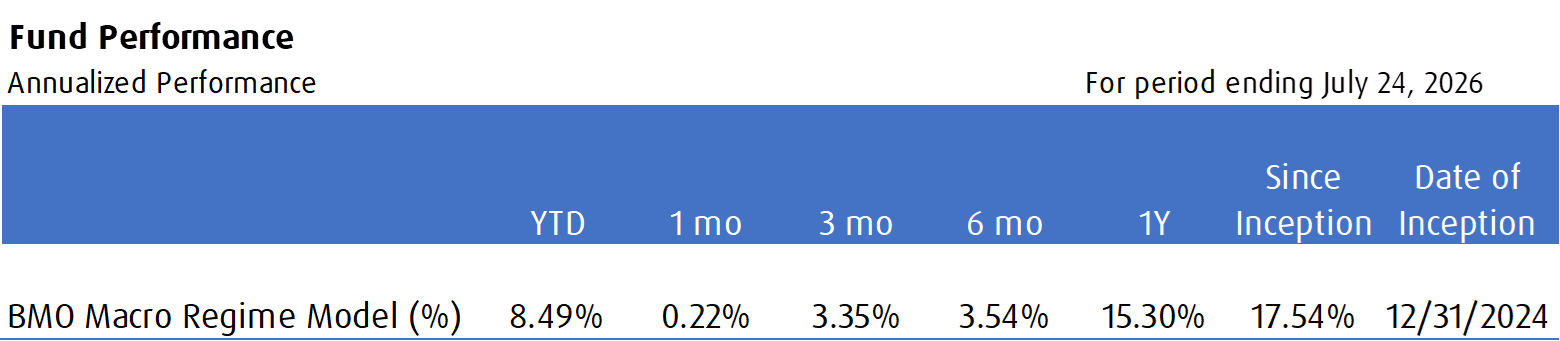
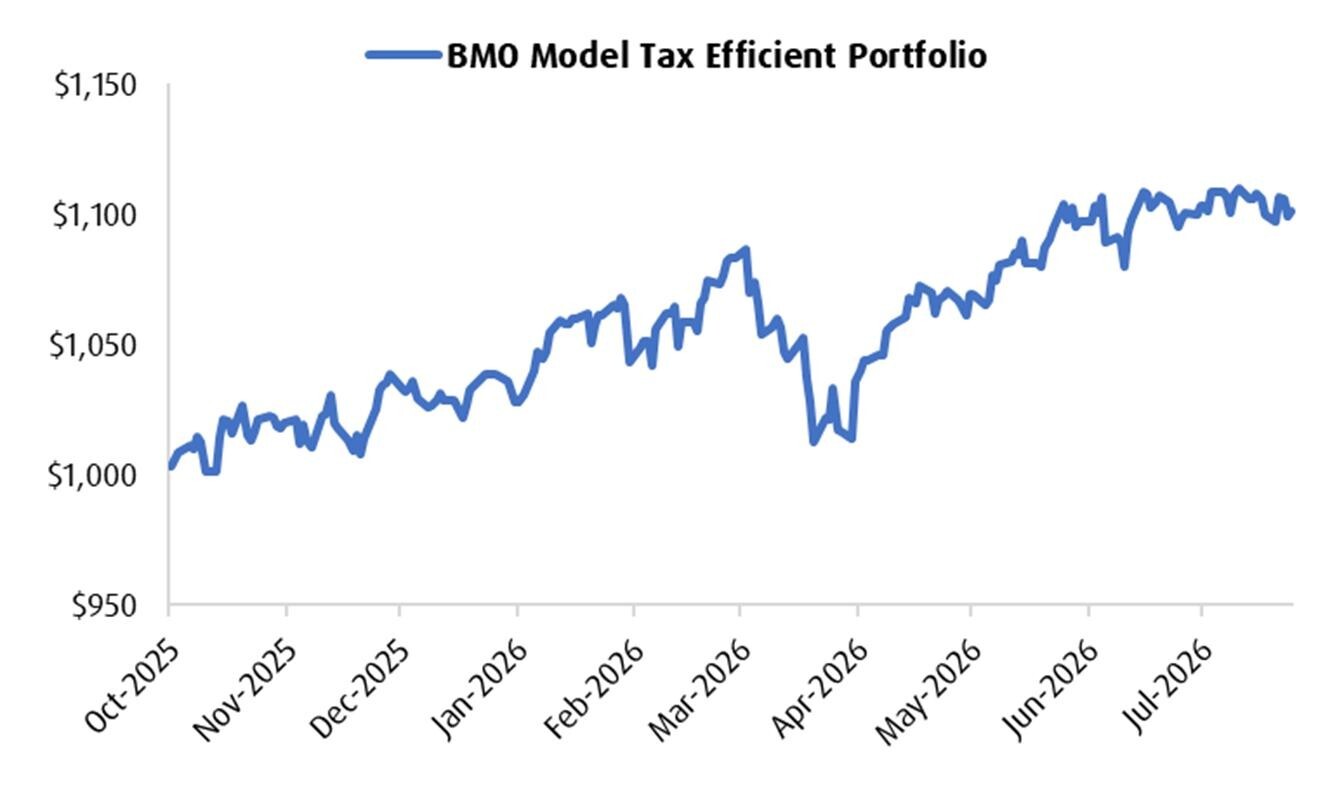
Chart 3 – BMO Tax Efficient Model Portfolio Performance

Key Events/Data for This Week
a.) In the US: The FOMC will finish deliberating on Wednesday afternoon. Market pricing for the event has shifted - with odds of a hike now at 40% for this week. We can probably chock that up to the rise in energy prices of late and the still uncertain reaction function with this current iteration of Fed leadership. We’re still of the mind that rates will be left on hold and likely revised higher later this year.
Meanwhile, on Thursday, we’ll get the first estimate of Q2 GDP. The street is penciling in a 2.1% annualized pace for the quarter, which is slightly above the 1.7% pace that a few Fed regional bank GDPNow models suggest.
b.) In Canada: There are two fairly important economic data releases this week. The May edition of the SEPH survey (basically Canadian version of nonfarm payrolls) as well as the May GDP number. The latter will be the more important of the two and should come in close to +0.1% m/m (thanks to a rebound in retailing and real estate) – which would leave Q2 tracking in the 2.5-2.6% annualized range.
c.) Earnings: This is an incredibly busy week for earnings.
- Wednesday: Microsoft, Meta, SK Hynix
- Thursday: Apple, Amazon, Samsung
- Friday: Chevron, Exxon Mobil
d.) Other important events/data
- US durable goods (Mon), Consumer confidence (Tues), and Employment Cost Index (Fri)
- Eurozone GDP for Q2 (first estimate) is out on Thursday. The first estimate of July CPI is out on Friday.
- In the UK, the BoE will keep rates on hold this Thursday.
- In Japan, the BoJ is expected to keep rates on hold later this week.
e.) Book of Trades
No changes this week.